The most commonly cited reason for stretching the iliotibial (IT) Band is to alleviate knee pain. Before we can state the best way to stretch it, we need to talk about what the IT band is, and then how it influences knee pain.
What is the IT band?
It’s imperative to note the IT band is not a muscle. I’m not sure if people realize this or not, but based on the way people talk about it, and talk about stretching it, I’m pretty sure people often think the IT band were like any other muscle.
It’s not.
Multiple muscles insert into the IT band. So rather than the IT band being a muscle itself, it is a band made of other muscles. The two big muscles comprising the IT band are the gluteus maximus (GM) and tensor fascia latae (TFL).

From Anatomy Trains by Tom Myers. (Get this book!)
It is crucial to understand the TFL and GM comprise different portions of the IT band. The TFL comprises the anterior portion and the GM the posterior portion.
Using the Anatomy Trains philosophy from Tom Myers, we can see while the GM and TFL insert into the IT band proximally (starting at the hip), other muscles insert into the IT band distally too (at the knee).

Credit to Anatomy Trains and Tom Myers
The anterior portion of the IT band connects into the tibialis anterior (TA) while the posterior portion connects into the peroneus longus (PL). Therefore, there is a connection between the TFL and the tibialis anterior, and another connection between the GM and peroneus longus. And all of these insert into one band.
How does it influence knee pain?
This is where it gets a little messier.
The most common cause of knee pain is an imbalance between all these muscles acting on the IT band. Specifically: the TFL is overactive and tight, but the tibialis anterior is underactive and long (remember these two muscles are connected on the anterior portion of the IT band). And then the peroneus longus is overactive and tight, but the GM is underactive and long (these two are connected on the posterior side of the IT band).
By looking at these muscles specific actions we can begin to figure out how pain arises. At the hip, the TFL abducts, flexes, and internally rotates the femur. It also laterally rotates the tibia.
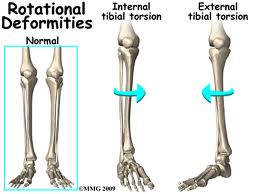
Meanwhile, the GM has almost the complete the opposite effect: Hip extension, lateral rotation of the femur and some possible internal rotation of the tibia.
That is, the TFL and GM have almost completely opposing actions at the hip and knee. This is why most often when one is strong/tight, the other is weak/long.
At the knee: Peroneus longus pronates and plantarflexes the foot and has some effect on lateral rotation of the tibia.
The tibialis anterior helps to supinate and dorisflex the foot and internally rotate the tibia.
That is, the PL and TA have opposing actions at the knee and ankle. In fact, these muscles not only insert at the IT band, they actually form a band together at the bottom of the foot!

Credit to Anatomy Trains and Tom Myers (www.anatomytrains.com)
Again, indicating when one is strong/tight, the other is weak/long.
Remember, the TFL is dominant over the GM, and the PL is dominant over the TA. Therefore, in terms of movement, we have a dominance of internal rotation of the femur, a dominance of lateral rotation of the tibia, and a dominance of pronation and plantarflexion of the foot.

This imbalance at the IT band will make itself evident during movements like a squat.
This is overwhelmingly the predominant cause of knee pain for people. And this is why so many people are trying to stretch their IT band.
However, now we can tell just “stretch the IT band” is a poor remedy. We need to stretch the band in a very specific manner in order to get rid of our knee pain.
The most effective stretch is going to calm down the overactive muscles and wake up the underactive ones. We need to loosen the tensor fascia latae and peroneus longs, but tighten up the gluteus maximus and tibialis anterior. An ideal stretch will combine:
-Hip adduction (loosen TFL)
-Lateral rotation of the femur (loosens TFL and tightens GM)
-Hip extension (loosen TFL and tighten GM)
-Internal rotation of the tibia (loosen TFL and PL, tighten GM and TA)
-As well as ankle dorisflexion and supination of the foot (loosen PL and tighten TA)
Why most IT band stretches fall short
Now that we know what makes an ideal IT band stretch to help get rid of knee pain, we can talk about why some stretches aren’t good. Let’s look at some of the most commonly used IT band stretches:

Breaking this down:
-We have lateral rotation of the femur (good)
-Possibly some internal rotation of the tibia (possibly good)
-Hip Abduction (Uh oh –This tightens the TFL)
-A great deal of hip flexion (Shit –also tightens the TFL and actually stretches the GM. Opposite of what we want.)
-Ankle plantarflexion and no pronation or supination (This isn’t good, but, you could modify this to make it better)
This is actually a fairly good stretch for the posterior aspect of the IT band. But as we’ve dissected at this point, we rarely want this. I’d say at least 95% of people with knee pain / people who need to loosen their IT band don’t want to stretch the posterior part.
Don’t forget about the abdominals
Before criticizing another stretch, this is a good place to talk about the abdominals, specifically the external obliques.
If we agree a tight TFL is a common issue in those with knee pain (if you don’t, you’re wrong), we need to also look at how a tight TFL affects the abdominals. I don’t want to go into another treatise on movement at the hip, but suffice to say much like the TFL and GM have opposing effects on the hip, so do the TFL and external obliques.
That is, the TFL pulls the front of the hip down and the EO pulls the front of the hip up (so do the glutes). In someone with a tight TFL, not only will they potentially have weak glutes, but they will have weak EO too. The result is a lordotic posture:

Therefore, a common effect of trying to stretch the TFL is an associated lordosis. This is because the TFL is tight and doesn’t like being stretched, it’s “stiffer” than the abdominals, so it pulls the hip downward to try and lessen the stretch. Not something we want when we’re trying to loosen that sucker up.
This is my long way of saying when attempting to stretch the TFL -and IT band subsequently- we need to pay careful attention to how the hips and lower back are moving. Ideally, they aren’t. Realistically, they do. This is often a pain in the ass to get people to do properly.
We’ll come back to this. Keep it in mind for now.
The next stretch:
Breaking it down:
-We do have hip extension this time (Much better than the other stretch)
-We have ankle plantarflexion (Not good. But this could be modified in the stretch. Although it still wouldn’t be ideal)
-We have hip adduction (Good)
-We have either a neutral tibia or lateral rotation of the tibia (not good)
-Femur is either in neutral or medial rotation (Not good)
At least this stretch is targeting the TFL portion of the IT band and not the GM portion. However, there are other issues. Referencing the importance of the external obliques, remember how we want the EO to be stiff when we stretch the TFL / IT band to make sure we’re generating as good of a stretch as we can and we’re not achieving movement from the lumbar spine.
You can’t see it in the video, but I guarantee the girl has a lower back arch during that stretch. Look around the internet of people doing this stretch and you find this rather quickly:


Notice the arched lower back? While the TFL / IT band is still being stretched some, we’re not doing anything to concurrently stiffen up the abdominals. Next, due to the lordosis, we’re generating a bit of stretch on the glutes. Finally, we’re also promoting mobility at the lumbar spine. Mobility at the lumbar spine is a precursor to lower back pain.
While you could cue the person to squeeze the abs to prevent the lower back arch, I find people have a really, really hard time with this. They just don’t know when they’re doing it properly, the right way it should feel, etc. It’s like coaching a 40 year old virgin.
Sorry, doctor, but you sir do not have the “world’s best IT band stretch.“
The better way
Breaking this down:
-By making sure the knee does not fall out to the side we have hip adduction (Good)
-A tiny bit of lateral rotation at the femur (Good). More can be accomplished but I find this doesn’t influence the stretch much.
-By letting the leg fall to the ground we let gravity give us hip extension (Good)
-Internal rotation of the tibia from turning the foot in (Good)
-Ankle dorisflexion and supination by pulling the big toe up and in (Good). If you do this last, you’ll notice a difference in the intensity of the stretch between letting your foot fall to the ground (plantarflexion) and pulling it up (dorisflexion). Many people will exclaim they get a better stretch all the way up in the hip just by pulling the foot upward. Further evidence the dorsiflexion and supination is helping to stretch the TFL / IT band and the TFL and TA are connected.
Also, because of the self-feedback mechanism of laying on a bench or table, you always know whether or not your lower back is arching (in lordosis). Therefore, you are guaranteed to know how hard you need to be squeezing your external obliques to make sure there is no compensatory movement at the spine.
Next, by lifting the arms overhead we can also generate a nice stretch in the lats, pecs, and rectus abdominus (all commonly tight). Not really necessary for a stretch aimed at knee pain, but it sure isn’t hurting anything.
BOOM. How’s that for bang for your buck?
With that said, here are the common ways people may mess this up:
1) Letting the foot plantarflex and pronate
You HAVE to make sure your foot is not pointing down and out to the side.


2) Not fully contracting the abdominals
If you’re not feeling any stretch in your hip / thigh it’s almost guaranteed you’re not fully squeezing the abs.
Watch the difference in thigh position when the abs are fully squeezed and when they are relaxed:
Notice the thigh elevates, bringing the hip into flexion, each time the EO are fully contracting. This illustrates tightness in the TFL because when the EO fully contract and posteriorly tilt the pelvis, the TFL is put on stretch. And when it’s put on stretch you can see the tightness by the thigh being pulled off the bench.
One sure fire way to know whether or not your abs are squeezed tight enough is if you’re lower back is flat on the bench. If it’s not, you’re abs aren’t tight enough. It’s worth noting for those with a fair amount of fat on their body, and or lower backs, sometimes they give themselves the “feel” of their lower back being flat when it isn’t. It’s just that their adipose tissue is thick enough to give them that illusion.
If you’re watching someone, it’s best to look at the top of their hips. Do they look angled downward? Like an anterior pelvic tilt? Then the abs aren’t squeezed enough. It’s hard to describe, but you can spot it.
If you’re having trouble with your abs (this is just a sign they’re weak and not strong enough yet) grab your opposite knee and pull it into your chest. This will allow your upper body to help posteriorly tilt your pelvis.

Then you can progress to one arm holding the knee in and the other arm overhead:

And then to both arms overhead.
3) Letting the hip abduct


This will happen due to the TFL not wanting to be stretched and thus pulling the hip into abduction.
For some people adducting the hip to a certain point will cause them to feel pain / pressure in their knee. This signifies that when the TFL is on stretch, knee pain arises. This is verrrry common.
Simply only let your hip adduct to the point where you don’t feel pain. Over time as the TFL loosens up you’ll be able to adduct further and further.
4) Poor posture at the upper body
A lot of people may not be ready to put their arms overhead when they first start doing this stretch. Many just do not have the thoracic mobility yet (or EO strength) to lay their upper back and head fully flat on the bench. Look at the difference in head posture here:
By making sure the chin is tucked you help insure the external obliques are posteriorly tilting the pelvis and not the rectus abominus. When you have that forward head posture and thoracic flexion the RA is in a shortened position. We do not want this. We want to stiffen up the EO, not the RA.
One final note: Don’t expect to feel an insane stretch when you do this. It’s not like you’ll feel like your TFL or thigh is going to rip apart from such a good stretch. Be much more concerned with doing it properly. Often times the biggest thing people feel is a hell of a lot of abdominal work. This is good. Remember, stiffening up the external obliques will indirectly loosen up the TFL.
Hold the stretch for at least 30 seconds.
And I’m out.
Please note the “best” element of this stretch is meant to be a sarcastic play. Understandably, sarcasm doesn’t always land through text. There’s no one magical exercise or stretch for every situation. See the comments for more.
For a more comprehensive look at stretching the IT band see: 6 Exercises to Loosen the IT Band
For a look at meshing this with a running program check out: 6 Weeks To A Healthy 10k
Here are some related posts I’ve written:
- Standing version of the best damn IT Band stretch
- My visit to the Washington University in St. Louis
- Sleep positioning and knee pain
Finally, if you’re tired of sifting through information yourself, get one on one help.


Victor (@victorblomma)
May 20, 2012
I can stand on one leg but im really feeling the compensation, that im leaning away moving the center of gravity. Foam rolling vastus lateralis, itb, tfl, adductors + the stretch and then clamshells + lateral band walks are the way im moving forward now. I think im doing progression, I dont think its an activation problem (anymore) cause I can really feel it working and tightingupp as I try to stand on one legg, i think its more of a strength issue since everything gets alot worse after swimming for example.
reddyb
May 21, 2012
Definitely.
Sounds like you are having some of the movement issues primarily when you are fatigued?
Victor (@victorblomma)
May 21, 2012
Yes, it gets alot worse then atleast. Should i beware of TFL activation when doing the lateral band walks?
reddyb
May 23, 2012
You definitely should be.
Trying to differentiate between TFL activation and gluteus medius activation during band walks can be tough. You may want to substitute clamshells instead.
Victor
May 24, 2012
Went to a sports doctor today, he said to focus on the hip strength. Since I can´t even stand on one leg without compensating how do I practise that without compensating?
reddyb
May 24, 2012
Practice standing on one leg while holding on to something. Gradually try to hold on to that something less and less.
Baby steps.
Victor
May 30, 2012
Went to a sportsdoc the other day, he says the problems are from a rotated pelvis causing a “locking” at the hip. He did some tests, the correlated the rotation did som tests again and I was alot stronger after the correlation. He said it was my poor abdominal strength that caused the rotation. I guess it fits, rotation of pelvis forces my hip flexors to work overtime. Thats why the hip flexor stretch get rid of my pronation. He said I will be all good by the end of june… hope he’s right
reddyb
May 30, 2012
The rotation at the pelvis can cause rotation at the knee. I touch on that a little bit in this post and stretch. (Weak external obliques cause issues with the IT band causing rotation at the knee.)
Sounds like your doc has a good handle of things.
4 weeks or so should be enough time to correct things if you’re working on the right things.
Let me know how it goes; best of luck!
Victor
July 5, 2012
Hello I have a report. So I’m working the abs hard, TVA and External/internal oblisque and some back muscles. Well this is what happend, no result. Got pain in my left QL because it was like the only muscle working when I did traning for my back. So went back to my physical therapist which did alot of massage on my left glute (I have pain in my right knee) and the day after it really felt like I had gotten my stride back I was so happy thinking finally something is happening. I took long walks without pain and I could really feel the glutes and everything on my right side working.
But then after 3-4 days i’m back to the same old me feeling like I have a twisted pelvis.. so frustrating… Ideas?
reddyb
July 5, 2012
Well, in what way have you been working the abs? Which exercises? There’s a lot of possibilities here.
Why are you bothering with the internal obliques, TVA, and lower back? What are you trying to accomplish?
Read this, it might give you some insight as to what causes a twisted pelvis: http://b-reddy.org/2012/06/23/assessing-the-hips-in-the-transverse-plane-why-your-lower-back-hurts/
Victor
July 11, 2012
Oh man, I went to another physical therapist yesterday, still doing the core work for the other one just to see what he had to say. He tested gluteus medius strength, the same way as everyone else. Then he kind of rotated my leg and pushed down making me resist. I just couldn’t do it. He compared with the other leg wich was strong. I can’t belive I’m having such a bad luck with these Physical Therapists. The gluteus medius weakness would be the best explenation tho some said I didn’t have weakness there. Anyway im going back there next week to start looking at a traning program.
He also said that we´re going to try taping muscles. Never heard of hit but might be worth a try.
I’m sorry if im spamming you blog post but it feels good to vent out some thoughts and feelings with someone who knows these things.
Victor
July 12, 2012
Alright just came back from my first session there. He has me working from the ground up, first thing i’ve gotta learn to do is internally rotate my tibia and second activating my vastus medialis.
reddyb
July 12, 2012
You have to be more specific.
“Core work” can mean an awful lot of things. As can glute medius work.
Victor
July 12, 2012
Im doing exercises to activate my TVA this seems to hav settled down some of my hip flexors a bit since it now feels like I hav gotten better hip extension and activation of my gluteus maximus. I’m also doing an exercise similar to the bird dog to make my “core” stabilize my spine. I’m trying to do clamshells to activate my gluteus medius without activating my TFL wich is way to overactive. That seems to be my biggest problem cause it’s causing a tourq att my knee.
reddyb
July 19, 2012
I’m not sure any reason for doing TVA work but alright. Let me know how it goes.
Wholistic Running
August 2, 2012
Love the blog! Wonderful, intelligent information, spot on!
I’m an ultrarunner with internally rotated femurs and externally rotated tibias. I also have vargus stress (bow legs shaped like ‘O’). Any thoughts on what exercises and stretches might be good for me?
Thanks, I really appreciate it. Also, feel free to check out my site, http://www.wholisticrunning.com
I’m curious what you think of Chi Running.
cheers,
Damian
reddyb
August 2, 2012
Thanks for the words Damian.
The stretch in the post is a good starting point for your issues. I haven’t written much else detailing other exercises for that condition.
From this post though you can figure out which muscles need what. For instance, the glutes need to be strengthened. Or, exercises where the TFL is very active should be abolished. Things of that nature.
At some point I will write more on this.
And I’m not familiar with Chi Running. If you want to throw out some information on it I may be able to comment then.
Victor (@victorblomma)
September 6, 2012
Im sorry it’s not the TVA I should be after as your post describes it’s the EO. But whenever I do side planks for instance… I think the TFL is doing most work… im trying to foam roll it but can’t seem to release it. And will do this stretch daily from now on…
Sean
September 25, 2012
Hi Brian,Thanks for this post. I found the explanation of how to do the stretch correctly easy to follow and I look forward to testing it out. I’m going to start training for a marathon and I would like to get rid of an old ITBS injury that never quite went away despite treatment and rest. Thanks again. Sean.
reddyb
September 25, 2012
Thanks Sean. Hope this helps.
Keep in mind only stretching the ITB is unlikely to fully resolve IT band issues like ITBS. It will help, but it’s not the whole story. There’s more about this in this long post: http://b-reddy.org/2012/09/03/my-visit-to-the-washington-university-in-st-louis-physical-therapy-program/
Best of luck.