I wrote a post, The best damn IT band stretch ever, which quickly became one of the more popular articles on this site. I also wrote a stretch for the rectus femoris, A better quad stretch, which is just about the most popular I’ve written. This post will make a lot more sense if you read those two first.
Somebody asked me if there was a standing version of “The best damn it band stretch.” I’ve actually meant to write something about this for a while, so here we go.
There is a standing way to do this, and it’s pretty damn effective. It’s very similar the stretch in A better quad stretch. I typically use the standing version more often than the kneeling version because it’s an easier set-up for people. Especially the clientele I have. (A good amount of older clients, clients who getting up and down off the ground is tough for, clients where kneeling is tough, etc.)
However, I still favor the “best damn IT band stretch.” The primary reason being it’s very hard to know whether the lower back is flat or not in the stretch below. Meanwhile, in the other IT band stretch the person has a bench or table as a feedback tool for knowing where their lower back is. (If it’s not on the bench, it’s not flat.) In anatomy terms, people get greater activation of the external obliques in the “best damn IT band stretch” compared to this one.
Anyways…
First, take your foot and put it up behind you on something. If you’re at the gym, a smith machine works great. If you’re at home, a chair or bed works well. Really, you can do this anywhere. A fence at the park, a bench somewhere, etc.

Next, make sure you have a proper set-up. Some of the most common faults are:
1) Letting the knee flair out to the side.
I wrote about this a ton in The best damn it band stretch ever, so check that out if you want a very thorough anatomy breakdown. Suffice to say, tightness in the TFL is what abducts the femur in this scenario.
So we DON’T want this:

We want the knees to be touching each other. MAKE SURE YOU DO THIS PROPERLY. I have clients who I have to remind of this every single session. If you don’t feel your knees touching each other, you are doing it wrong.
2) Treating this as a quad stretch.
This is NOT the same as pulling your foot behind you and doing your kindergarten “pull your heel to your butt” stretch.

NO NO NO NO NO NO NO NO!!!!!
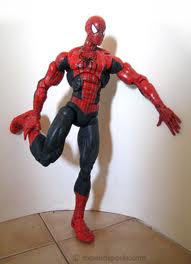
Again, NO! Note how even Spider Man has a tight TFL / IT band.
The way this manifests in this stretch is people always lean back and make their heel touch their butt. You – do – not – want – this. This causes hip flexion, and we are aiming for hip extension. A very crucial distinction. Hip extension means we are fully stretching the tensor fascia latae and rectus femoris.
Do not do this:

Stand nice and tall instead.
3) Letting the lower back arch.
I wrote about this malalignment a ton in A better quad stretch and Thoughts on hamstring curls. Check those for a more comprehensive anatomy discussion. In short, the lumbar spinal erectors and rectus femoris are overpowering the external obliques and glutes. This causes the anterior pelvic tilt and lower back to arch.
This is where it’s important to consider how high you place your foot. The higher it is, the more likely you are to arch your back. For instance, if you look at Holly’s back here you can see this foot position is too high for her:

The foot should be high enough a stretch is generated and it is challenging for the person to pull their stomach in. But, it shouldn’t be so high that keeping the lower back flat becomes impossible.
After you have proper alignment, squeeze your butt on the side where the foot is up. So, if your left foot is up on the bar behind you, squeeze your left butt cheek.
At the same time, make sure you keep pulling your stomach in.
Whenever you stretch the hip flexors it is crucial to have concurrent glute / external oblique activation.
For some of you, you are going to feel a massive stretch down the front of your thigh, if you don’t already. While this is good in the sense it lets you know you are doing the stretch properly, and that you indeed need this stretch, don’t squeeze so hard you begin to debate if you could tear your muscle. That’s too much.
Here is the stretch in full. Notice how Holly has to continually remind herself to pull her stomach in, but when she does, she can do it. Thus, this is just about the right height:
You’ll notice in the video I like to add a little rocking back and forth. This just adds amplitude and allows for some more bang for your buck.
Give it a shot. It’s an awesome stretch for knee and lower back pain. Especially those of you who have knee pain while lunging. Do a few sets of this before your lunges and you’ll likely notice your pain greatly diminish, if not disappear.
***
For more on loosening the IT Band, check out: 6 Exercises to Loosen the IT Band
***


marwooj
June 2, 2012
I must be doing both of them wrong, I just can’t feel anything. Or my “after run just below knee cap pain” and “after running stair problem” is not because of tight IT band.
reddyb
June 3, 2012
While it’s really rare (at least in the people I see) to not feel anything during these stretches, sometimes the person just isn’t tight in these muscles and doesn’t really need the stretch.
It’s almost always the person is doing the stretch wrong, but sometimes they truly aren’t tight.
marwooj
June 3, 2012
How about that one:
[broken link redacted]
I feel here a lot, is this goog exercise?
reddyb
June 4, 2012
Good is always relative to the person. So, without knowing you it’s hard to say.
All I can really say is I wouldn’t have any of my clients performing that stretch.
Joe D
June 15, 2012
Similarly, I have issues feeling anything with both the quad and ITB stretches (too bad you arent in NYC:).
Question, you mention in one of the linked posts that stretching the front portion of the hip capsule is a “huge no-no”… wondering why?
I had labral tear/FAI surgery about 6 months ago and have had a lot of issues post-op with general tightness pretty much all around my hips (psoas, quads, ITB, adductors, abductors). Been trying to piece together what works and what doesn’t on my own, as the pros havent been helpful.
Great site, btw!!
reddyb
June 18, 2012
Hey Joe,
Thanks for saying you enjoy the site. I appreciate it.
Make sure you’re really squeezing the stomach. A lot of times just a little tweak in form is the difference between not feeling the stretch and feeling it a ton. Unfortunately, it’s hard to relate through text / video and not being there in person. If you have any videos or pictures of you doing them feel free to shoot them to me.
As far as stretching the anterior hip capsule: It’s a huge no-no because the most common cause of hip pain is femoral anterior glide. In other words, the hip capsule becomes HYPERmobile -or too mobile- in the anterior direction. So, people rarely need more anterior hip mobility. They could almost always go for more posterior capsule laxity. (This is true of the shoulder as well.)
Now surgery changes everything. A lot of rules get thrown out the window. And surgery for labral tears in the hip are something I have very little experience with.
However, all the muscles you listed are commonly tight and it’s hard for me to imagine a scenario where someone couldn’t go for more posterior glide in their hips.
In terms of general hip stretching though, a toddler squat is a great way to loosen up the hips. Think sitting down in a full squat and being able to sit there for a few minutes. Like a toddler would when playing with their toys.
I have nearly all my clients do this. It’s as primitive a movement pattern as walking. Might be something to look into / experiment with.
Sorry I can’t be more specific. Hope this helps in some way.
soupercat
January 6, 2013
Great stretch and very informative website – thank you Brian.
I’ve been having knee pain in my right knee after running about 1 mile. I was previously able to run about 10 miles without issue, and then the knee pain started about a month ago. After much searching around for IT band, ITBS, etc… I finally stumbled upon your site.
I’m doing the stand up version of the IT band stretch, and when I’m doing it I feel a nice stretch in my thigh, and a very similar pain in my right knee that I experience after running.
I trust this is to be expected and proves that the stretch is working?
How long should one hold the stretch?
How often is it safe to repeat it?
My left leg I get a stretch, but very little to no pain in my left knee.
Cheers!
Sean.
reddyb
January 7, 2013
Hey Sean,
Glad to hear this stuff has been of use to you.
This is pretty typical. However, I never have someone stretch into pain. So, I’d follow the progressions outlined in the post and lower the intensity to where a stretch was felt, but pain wasn’t.
I rarely have people perform a stretch for a duration; rather I go for reps. If you’re someone who is really tight I typically do at least 4 sets of 15 reps.
Where do you feel pain on the knee during this? If it’s around the knee cap, chances are you’re on the right track. If you’re having issues on the inside of the knee (medial joint line) you may have something else going on. (Meniscal tear for instance.)
Something to keep in mind. IT band is often, but not always, the culprit.
Hope this helps.
soupercat
January 7, 2013
Thank you for the response. 🙂
The pain is around the knee cap – definitely not on the inside. I have found some very tender pressure points on my hip as well. So I think it’s reasonably safe to assume it’s IT band related. Every other thing seems to be pointing in that direction. 😉
Do you have an opinion on ART (Active Release Therapy) for helping out with IT bands?
I have also been doing the simple strengthening exercises here – do these make sense from your experience?
http://news.menshealth.com/it-band-syndrome/2012/07/27/
Thanks again Brian!
Sean.
reddyb
January 7, 2013
Where on the hip?
I like ART, however, there seems to be some debate as to whether you can effectively loosen up the IT band with direct manipulation (massage, or ART in this example).
I remember hearing Tom Myers (of Anatomy Trains) state there was recent research declaring the band is simply too strong for human hands to have any influence on. Tom Myers is about as good as it gets when it comes to manual therapy, so I’d defer to him here.
HOWEVER, don’t forget there are muscles (!) that insert into the band. So, I do like to go after these muscles with say, ART, in hopes that loosening the muscle will impact the band. The primary muscle in this case would be the TFL.
And honestly I’ll have people roll the band too. Whether anything is actually happening I don’t know, but people always seem to feel better. So why not?
Those exercises are pretty good. Not great; not horrible. I talk a lot about the gluteus medius, albeit in much more detail, in this post, if you haven’t seen it: http://b-reddy.org/2012/09/03/my-visit-to-the-washington-university-in-st-louis-physical-therapy-program/
But to answer your question, yes, strengthening the gluteus medius and glute max is certainly worthwhile.
Edit 10/14/16: Rolling comments could be better detailed. More info here: https://b-reddy.org/2013/05/20/issues-with-foam-rolling/
soupercat
January 7, 2013
If I’m reading the anatomy diagrams correctly, it looks like the spot on my hip is probably the TFL – or darn close to it. I found an image in Google Images that looks like the same spot I’m finding sensitive: [redacted broken link]
Great perspective on ART – use it to target the muscles that insert into the band rather than the band itself.
Thanks again, I will read through your other article and glean what else I can. In the meantime, I will stretch, strengthen and hopefully abolish this pain back to whence it came. 😉
Cheers!
Sean.
gala
May 28, 2013
hi, just found this site. i think that this is the stretch that i have been looking for. how long does one hold the stretch for?
reddyb
May 29, 2013
I prefer reps over time. Typically 15 reps.
Larry
October 7, 2013
Which leg is getting the lion’s share of the stretch — the one extended behind, or the one touching the floor? I ask because my right leg is the one with all the problems, including a very tight IT band and a very tight psoas muscle (according to my massage therapist). The pain I have while walking right now can be unbearable — it actually feels like sciatica since much of the pain extends down below my knee and into the ankle. Oddly, I have no pain in or around the knee itself.
I haven’t had an injury and am otherwise in great shape. But this debilitating pain in my right leg has to get better … or else. (It’s likely caused from too much sitting at the computer, too much sitting at a piano bench, and too much time standing in awkward positions filming with a video camera — all of which I have to do as part of my job.)
Other suggestions, Brian, on how I can get better?
reddyb
October 8, 2013
-The one extended behind.
-For what it’s worth, in my experience, most massage therapists judge how tight a muscle is by how tender it feels to the person they’re massaging. That is, they rub on a spot, you go “Ouch! Ouch!” they decide that muscle is tight. This is a very, very poor method for assessing muscle length. I haven’t covered this directly yet, but indirectly I have here: http://b-reddy.org/2011/07/21/just-because-it-feels-tight-doesnt-mean-it-is/
And here: http://b-reddy.org/2011/07/04/muscles-and-onion-bags/
-If you’re having sciatic issues, you probably need to pay more attention to your lower back: http://b-reddy.org/2013/09/09/some-quick-notes-on-piriformis-syndrome/
Larry
October 9, 2013
Great info on piriformis syndrome, Brian. Helps a lot. Didn’t realize how much I was twisting my lower back while working at the computer. I’m extremely right-hand dominant and tend to do everything favoring that side. Now my right leg is paying the price.
Look forward to your future posts!
reddyb
October 10, 2013
Thanks Larry. Glad to hear you got something out of it.
Den
October 22, 2013
Very good stretch and an excellent Blog, lots of great info.
You recommend this before lunges, but would you recommend this before a run or cycle fr somebody with ITBS? And do you recommend a warm up first!
reddyb
October 22, 2013
Yes, definitely.
If you want a more comprehensive look at how I often go about issues of this nature, I have an ebook here: http://b-reddy.org/2013/08/20/6-exercises-to-loosen-the-it-band/
Josh Blaylock
January 25, 2014
I actually feel lateral pain in my knee when doing this. Am I doing it correctly? I don’t feel a lot of stretch either.
reddyb
January 26, 2014
Hey Josh,
Your questions are covered in this post and the comments section.
Samantha
June 28, 2014
I’ll give it a shot. The pain in my knee is on the upper right side of the knee cap and inside knee also (left knee). I hope it’s my IT band and not something else. I recently was putting in a lot of running miles per week and that’s when it began. Will continuing to run make it worse? It hasn’t so far, the pain is the same just won’t go away. Should I stretch both legs or just the one in pain? I don’t have a lot of patience for stretching but willing to do what it takes. Also does icing the pain knee help? The joys of approaching 40 I guess.
reddyb
June 30, 2014
Hey Samantha,
The running is definitely something you want to look at. Whether it’s adjusting your weekly mileage, adjusting your weekly routine, etc.
If you’re doing the “all I do is run” routine, where running is the only exercise you’re doing, that’s often a recipe for injury. Unfortunately, it takes work to be able to run. There’s a good quote out there “You don’t run to get in shape; you get in shape to be able to run.”
I would stretch both legs.
Icing is covered here: http://b-reddy.org/2011/09/27/should-you-ice-an-injury/
Roseann
August 1, 2014
I have found your site, eventually, after my chiropractor threw out a statement at my last visit: “You know, not all foot pain is caused by plantar faciitis.” I have had surgery, (2000) by a podiatrist for heel spurs and plantar faciitis. The pain in my mid-foot, arch never went away, and I have tried many ortho docs, surgeons, podiatrists, and chiropractors to try to find relief – always saying, “I don’t know if I’m walking funny because my feet hurt, and it’s killing my back; or my back is wrong, making me walk funny, and irritating my feet.” I have never felt PF was correct, as I have pain the more I am up, vs. first thing in the morning, and it has NEVER went away. I wore “boots” to bed for a year, had physical therapy for 4 mo., followed an exercise routine (elliptical, and “circuit” machines) for a 6 mo. period and little or no relief. When I found your pics of the IT band on the anatomy page…it was perfect! I have a burning, sore-like-its-bruised pain that is constant across my lower back, down the outside of my hips, down to the outside of my knee – where there is a very tender spot – then continues down the outer/back side of my lower legs, ankles – mostly inner, then around the middle of my arches. Yes, both legs, knees, feet! I rub that whole strip as hard as I can with knuckles, and I do feel some relief – although while rubbing the pain is almost more than I can take in some areas….found that out while having hubby try to rub… Have any thoughts as to where I can turn for help? I am approaching 52, and I can’t bear walking or standing – def. no elliptical, etc. I just sit, and I’m so afraid that the rest of my life is going to be in a chair.
reddyb
August 3, 2014
Hi Roseanne,
This post may be relevant to you: http://b-reddy.org/2013/02/01/can-foot-pain-and-hip-pain-be-related/
Beyond that, there’s quite a bit on this site about issues at the lower back, hips, knees and feet. I’ve written extensively about these things and have quite a bit of links to other resources.
Hope that helps.
Kevin
October 4, 2014
This stretch is great. How long do you hold it for? And how often can you do it ?
reddyb
October 6, 2014
Hey Kevin,
4 sets of 15 reps.
Tough to do it too often. Three days a week is a good minimum.